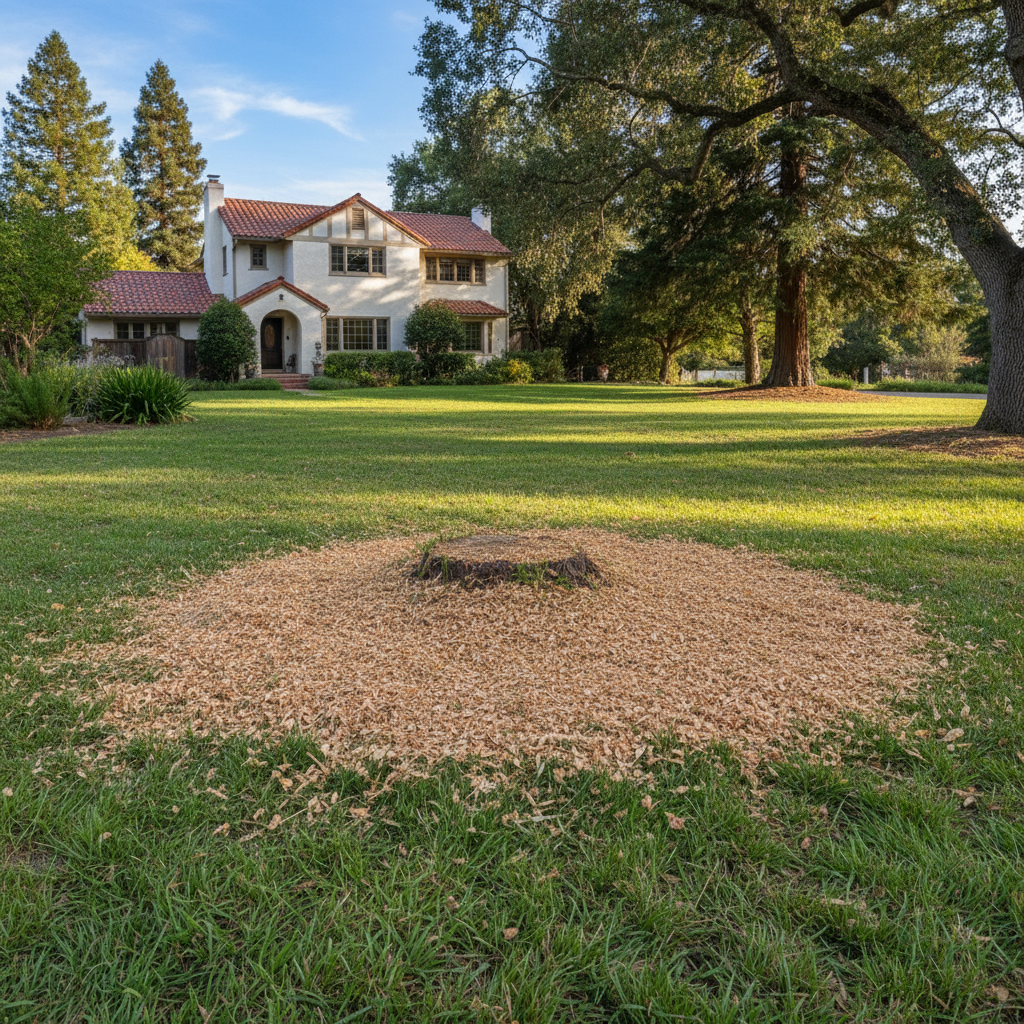
You've had a tree removed, or maybe there's an old stump from before you bought the place. Now you want it gone. Simple enough, right? You'd think so. But I've seen homeowners around Menlo Park make some pretty common blunders when it comes to stump grinding and removal, and they usually end up regretting it.
Mistake #1: Not Knowing the Difference Between Grinding and Removal
This is a big one. A lot of folks use these terms interchangeably, but they're not the same. When you grind a stump, a machine grinds it down to chips, usually 6 to 12 inches below grade. That's usually enough for planting grass or putting down some mulch. But the roots are still there, slowly decaying.
Stump removal means getting the whole thing out – the stump, the major roots, everything. This is a much bigger job, often involving excavation, and it leaves a much larger hole. You need to be clear with your contractor about what you actually want. If you're planning to build a deck or an addition right where the stump was, grinding alone won't cut it. You'll need full removal to avoid issues with settling or future root growth impacting your foundation.
Mistake #2: Going with the Cheapest Bid Without Asking Questions
Look, I get it. Everyone wants to save a buck. But when you're dealing with heavy machinery and potential underground hazards, the cheapest bid can often be the most expensive in the long run. I've seen guys come in with a lowball price because they're not insured, or they're using old, unsafe equipment, or they're just planning to do a shoddy job.
You need to ask for proof of insurance – liability and workers' comp. If they can't provide it, walk away. Period. If something goes wrong, like they hit a utility line or damage your property, you're on the hook. Also, ask what's included. Does that price include hauling away the grindings? Filling the hole with topsoil? Or are you left with a pile of wood chips and a crater in your yard?
Mistake #3: Forgetting About Underground Utilities
This is a major red flag if your contractor doesn't bring it up. Before any grinding or digging starts, you absolutely need to call 811, the 'Dig Safe' number. They'll mark out underground utility lines – gas, water, electric, communication cables. Hitting one of these isn't just expensive; it can be incredibly dangerous. I've seen it happen. Don't assume the contractor will do it, and don't assume there's nothing down there. Even in older neighborhoods like Lindenwood, where homes have been around for decades, utility lines can be unpredictable.
A good contractor, like us at All Things Tree, will insist on this step. If they try to brush it off, that's a sign they're cutting corners and putting your property and safety at risk.
Mistake #4: Not Considering the Aftermath and Cleanup
So, the stump is gone. Great! Now what? Stump grinding creates a lot of wood chips, dirt, and debris. Some contractors will grind the stump and just leave the pile of grindings for you to deal with. That's fine if you want them for mulch, but if you don't, you're stuck with a big mess.
Always clarify if cleanup and debris removal are part of the quote. If they're not, factor in the cost or effort of doing it yourself. And think about what you want to do with the hole. Do you want it filled with soil and seeded? Or are you planning to put in a new tree or shrub? Having a plan for the area post-grinding will save you a lot of hassle.
Mistake #5: Ignoring Potential Regrowth
Especially with certain tree species, like some oaks or liquidambars common in our area, even after grinding, the roots can sometimes sprout new shoots. It's not super common with a deep grind, but it can happen. If you're seeing little sprouts coming up around where the stump used to be, you might need to treat them with an herbicide or have them re-ground. A good contractor will discuss this possibility with you and offer solutions if it occurs.
Don't just assume the problem is solved forever. Keep an eye on the area for a few months after the work is done.
Mistake #6: Not Getting a Written Estimate and Contract
This should be standard practice for any home service, but it's especially crucial for tree work. A verbal agreement is worth about as much as the paper it's not written on. Get everything in writing: the scope of work (grinding depth, removal vs. grind), the total cost, what's included (cleanup, debris removal, utility marking), the timeline, and payment terms.
This protects both you and the contractor. If there's any dispute later, you have a clear document to refer to. Don't be afraid to ask for clarification on anything you don't understand before you sign. It's your property and your money, so make sure you're comfortable with every detail.
Taking a little extra time upfront to ask the right questions and choose the right professional can save you a lot of headaches and unexpected costs down the line. You want that stump gone, not replaced with a new set of problems.