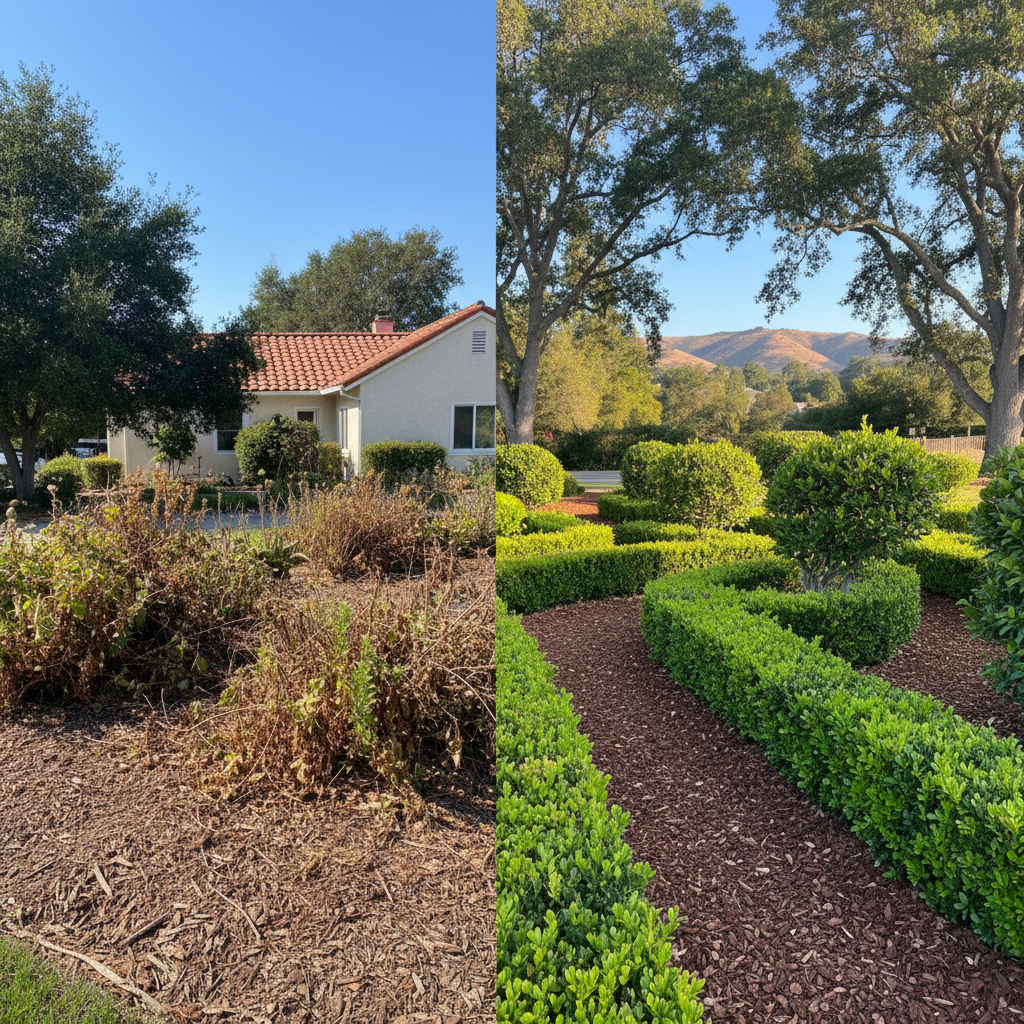
Alright, let's talk about those shrubs and bushes around your place. You've got them for a reason, right? Privacy, curb appeal, maybe some nice flowers. But keeping them looking good and healthy? That's where the trimming comes in, and there are two main ways folks go about it: shearing and selective pruning. I see both approaches all over Menlo Park, from the older homes in Allied Arts to the newer builds near Sharon Heights, and each has its place. But for most homeowners, one method usually makes a lot more sense.
Shearing: The Quick & Uniform Look
Shearing is what most people picture when they think about trimming hedges. It's that clean, uniform, often geometric look. You take hedge trimmers – usually power tools – and just buzz the outside of the plant, cutting everything to the same height and shape. Think of those perfectly squared-off privet hedges or neat rows of boxwoods you see.
Cost: This is where shearing often wins upfront. It's fast. Because it's less labor-intensive and doesn't require as much skill or an 'eye' for the plant's natural form, it generally costs less per visit. If you're doing it yourself, it's quicker too.
Appearance: You get that formal, manicured look. If you want a straight line or a specific shape, shearing delivers. It can be very effective for creating boundaries or a very tidy aesthetic.
Durability & Maintenance: Here's where shearing starts to show its downsides. When you shear, you're constantly cutting off the outer layer of leaves, which are the most active in photosynthesis. Over time, this can lead to a dense, leafy shell on the outside, but the inside becomes bare and woody. We call this 'shelling out.' The plant gets stressed because it's always trying to push new growth to replace what you're cutting. This can make it more susceptible to pests and diseases. Plus, because you're only cutting the tips, the plant often responds by sending out a flush of new growth quickly, meaning you'll need to shear more frequently to maintain that crisp look – sometimes every few weeks during the growing season.
Selective Pruning: The Healthier, Natural Approach
Selective pruning, also called hand pruning or structural pruning, is a more thoughtful process. Instead of just buzzing the surface, you're looking at each branch and making cuts strategically. You're removing dead, diseased, or crossing branches, thinning out dense areas, and shortening branches back to a side branch or bud. The goal is to improve the plant's health, airflow, and natural shape.
Cost: Upfront, selective pruning usually costs more per visit. It takes more time, more skill, and often involves using hand pruners, loppers, and sometimes even a hand saw. It's a craft, not just a cut.
Appearance: The look is more natural and organic. The plant retains its inherent shape, but it's tidier, healthier, and often blooms better. You'll see individual leaves and branches, not just a solid green wall. It's a softer, more elegant look that lets the plant's true beauty shine.
Durability & Maintenance: This is where selective pruning truly excels, especially for our California climate. By removing unhealthy wood and thinning the canopy, you improve air circulation, which is crucial for preventing fungal issues, especially after our occasional heavy rains or during humid periods. The plant is less stressed, more vigorous, and better able to withstand pests and diseases. Because you're encouraging healthy growth from within, the plant doesn't try to frantically push out new growth on the surface. This means you typically need to prune less frequently – often just once or twice a year, depending on the species. The cuts are made to encourage long-term health and a stronger structure.
My Recommendation for Menlo Park Homeowners
For most shrubs and bushes around your Menlo Park property, I'm going to lean heavily towards selective pruning. Here's why:
- Plant Health: It's simply better for the long-term health and vigor of your plants. They'll live longer, look better, and be more resilient.
- Reduced Frequency: While the initial cost might be higher, you'll likely need fewer trimming sessions throughout the year. This often balances out the cost, and sometimes even saves you money in the long run compared to constant shearing.
- Natural Beauty: Most shrubs are beautiful in their natural form. Selective pruning enhances that, rather than forcing them into an unnatural shape. Think about the lovely flowering shrubs we have here, like camellias or rhododendrons; shearing them would ruin their bloom cycle and natural elegance.
- Better for Drought Tolerance: Healthy plants with good air circulation are generally more efficient with water and more resilient to our dry summers.
Now, are there exceptions? Sure. If you have a formal hedge that you absolutely want to be a perfect, impenetrable green wall, then shearing might be your go-to. But even then, I'd recommend incorporating some selective thinning every few years to prevent that 'shelling out' problem. For most of your landscape plants, though, you want them to thrive, not just survive.
If you're not sure which approach is best for your specific plants, or if you're looking for someone who understands the difference and can give your shrubs the right kind of care, give us a call at All Things Tree. We've been helping folks in Menlo Park keep their landscapes looking sharp and healthy for years, and we'd be happy to take a look at what you've got.